

Last Updated: November 21, 2026
Quick Summary
The best clean skincare for sensitive skin pairs barrier support like ceramides, squalane, and panthenol with soothing botanicals such as oat, aloe, and chamomile, while skipping drying alcohols, synthetic dyes, and heavy fragrance. Keep your routine short and patch test one new product at a time. Remember that clean is a marketing word, not a regulated one, so read the ingredient list rather than the front of the bottle.
- No US agency defines or regulates the word clean, so treat it as a brand's own standard.
- Barrier ingredients work best in leave-on products like moisturizers and serums, not rinse-off cleansers.
- Soothers earn their place when they appear in the first five to seven ingredients of a leave-on formula.
- Patch test a pea-sized amount on the inner forearm or neck and check at 24 and 48 hours.
- Introduce one new product at a time and give each a full week before adding the next.
Table of Contents
- What Clean Skincare for Sensitive Skin Really Means
- Clean Skincare Ingredients for Sensitive Skin That Earn Their Place
- How These Products Were Chosen
- Best Clean Skincare for Sensitive Skin: Product Picks by Category
- Fragrance-Free Skincare for Sensitive Skin: What to Know Before You Buy
- A Gentle Skincare Routine for Sensitive Skin, Morning and Night
- Dermatologist Recommended Skin Care Products for Sensitive Skin: What That Label Can and Can't Tell You
- Patch Testing and Introducing New Products Safely
- Frequently Asked Questions
What Clean Skincare for Sensitive Skin Really Means
The best clean skincare for sensitive skin starts with one hard truth: "clean" is a marketing word, not a regulated one. That matters because sensitive skin reacts to what's actually in the bottle, not to what the label promises. Below, we'll show you exactly how to separate real clean skincare from marketing noise, then give you a category-by-category lineup that calms instead of provoking.
Clean Is a Claim, Not a Regulation
No US agency defines "clean" or polices who uses it. The Federal Trade Commission's guidance on environmental and "free" claims requires brands to be truthful and not mislead, but "clean" itself has no legal definition. So treat it as shorthand for a brand's own standards. Read the ingredient list, not the front of the bottle.
Sensitive Skin vs. Contact Dermatitis
Sensitive skin is a tendency toward stinging, tightness, and visible redness after products or weather changes. Contact dermatitis is different: it's a diagnosable reaction, either irritant or allergic, that often needs a doctor. The American Academy of Dermatology's guidance on skin reactions recommends seeing a dermatologist for persistent rashes. If a product burns, stop using it and get it checked rather than layering on more.
Clean Skincare Ingredients for Sensitive Skin That Earn Their Place
Certain ingredients do quiet, reliable work on reactive skin, but only if you know what they actually do and where they sit on the label. A soothing botanical listed after the preservative is decoration; the same botanical near the top of the list is doing a job. Here is what to look for, what each ingredient does mechanically, and how to read its position on the ingredient list.
Barrier support: ceramides, squalane, and panthenol
The skin barrier is a brick-and-mortar structure: skin cells are the bricks, and a mix of ceramides, cholesterol, and fatty acids is the mortar. When the mortar thins, water escapes and irritants get in, which is why reactive skin often feels tight and stings. Ceramides replace missing mortar. Squalane is a lightweight emollient that mimics the skin's own sebum and softens without a heavy film. Panthenol (provitamin B5) is a humectant that also supports the skin's own repair processes.
Soothers: oat, aloe, chamomile, allantoin
Colloidal oatmeal is a soothing ingredient often used on irritated skin. Aloe vera and chamomile (often listed as Chamomilla recutita or chamomile hydrosol) are cooling humectants that calm the look of redness. Allantoin is a low-key comfort agent that softens rough texture. These ingredients earn their place when they appear in the first five to seven ingredients of a leave-on formula.
Hydration: glycerin, hyaluronic acid, and humectant layers
Dehydrated sensitive skin often reads as "sensitive" because a compromised barrier loses water fast. Glycerin is a common humectant used in skincare formulas. Hyaluronic acid and sodium hyaluronate draw water to the surface; they work best when sealed under a moisturizer, or they can leave skin feeling tighter in dry air. A practical rule: humectant first, emollient second, occlusive last.
Oils: jojoba, argan, and hemp seed
Plant oils are emollients, not moisturizers in the water-binding sense, they soften and slow water loss but do not add water. Jojoba is technically a wax ester that closely resembles human sebum, which is why it suits reactive skin. Argan and hemp seed are lighter oils rich in linoleic acid; a common pattern is that linoleic-rich oils suit acne-prone sensitive skin better than oleic-rich oils like olive or coconut, which can feel heavy and, for some people, clog pores.
What to skip or minimize
- Drying alcohols (denatured alcohol, alcohol denat., isopropyl alcohol) high on the list, they speed water loss.
- Synthetic dyes (often listed as CI numbers such as CI 19140), no benefit for skin, occasional triggers.
- Heavy fragrance blends, "fragrance" or "parfum" can stand in for dozens of undisclosed compounds and is a leading cause of contact reactions.
- Essential oils, lavender, citrus, peppermint, and eucalyptus are lovely but are still potential triggers for very reactive skin. "Natural" does not mean "non-irritating"; poison ivy is natural.
How to read the list in practice
Ingredients are generally listed in descending order of concentration down to 1%. Scan the top five for your barrier and humectant ingredients; scan the bottom third for fragrance, dyes, and essential oils. If a "clean" product's first five ingredients are water, a drying alcohol, and three fragrance components, the front-of-bottle claim is doing all the work. Patch test anything new, the next section walks through exactly how.
How These Products Were Chosen
We picked by category, not by hype. Every formula below comes from our own small-batch line, made by a women-led family team, and every pick had to meet four filters:
- Gentle, low-irritation base with no harsh detergents
- Soothing botanicals like chamomile, aloe, or oat near the top of the list
- Barrier support from ceramides, squalane, or plant butters
- A clear job in a routine, so you're not doubling up
We favor fragrance that comes from essential oils over synthetic perfume, and we tell you where each pick fits. Here's the lineup at a glance:
| Product | Category | Price | Best For |
|---|---|---|---|
| Honey Vortex Face Wash | Cleanser | $20.00 | Dry, reactive skin |
| Radical Bloom Toner | Toner | $18.00 | Extremely sensitive skin |
| Aqua Armor Toner | Toner | $18.00 | Dry, dehydrated skin |
| Sacred Drops Serum | Serum | $16.00 | Daily soothing |
| Skin Reign Serum | Serum | $22.00 | Very dry, reactive skin |
| Drought Defier Serum | Serum | $16.00 | Stubborn dryness |
| Aloe Armor Face Cream | Moisturizer | $32.00 | Barrier support |
Price
Best Clean Skincare for Sensitive Skin: Product Picks by Category
Here's where the lineup earns its keep. Each pick solves a specific problem, so match the product to your skin concern rather than buying the whole shelf at once.
Gentle Cleanser: Honey Vortex Face Wash
Honey Vortex is a creamy, low-lather cleanser built on raw honey, almond castile, and nourishing oils. It cleans without the tight, squeaky feeling that signals a stripped barrier. Oat oil, argan oil, and rosewater hydrosol calm and soften, and the lavender-coconut scent keeps it feeling like a ritual rather than a chore. You can shop the Honey Vortex Face Wash details to check sizes and ingredients.
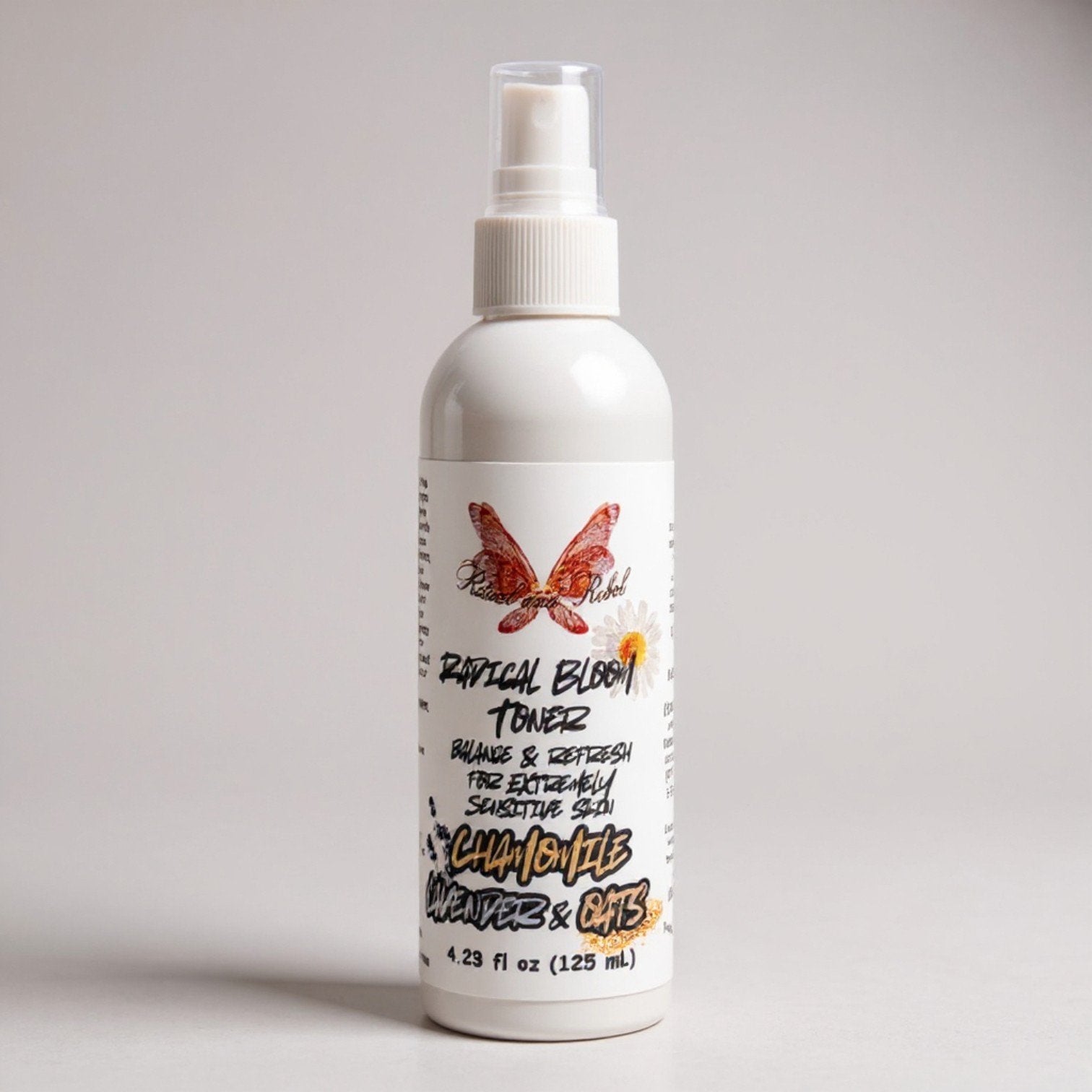
Toner: Radical Bloom and Aqua Armor
Two toners, two jobs. Radical Bloom is made for extremely sensitive, reactive skin, with chamomile hydrosol, apple cider vinegar, and oat extract to calm and rebalance. For barrier-damaged skin, start once daily for three to five days before moving to twice daily. Aqua Armor targets dryness with rose and cucumber waters, glycerin, and panthenol to draw in moisture and lock it down. See the Radical Bloom Toner product page for full ingredients.
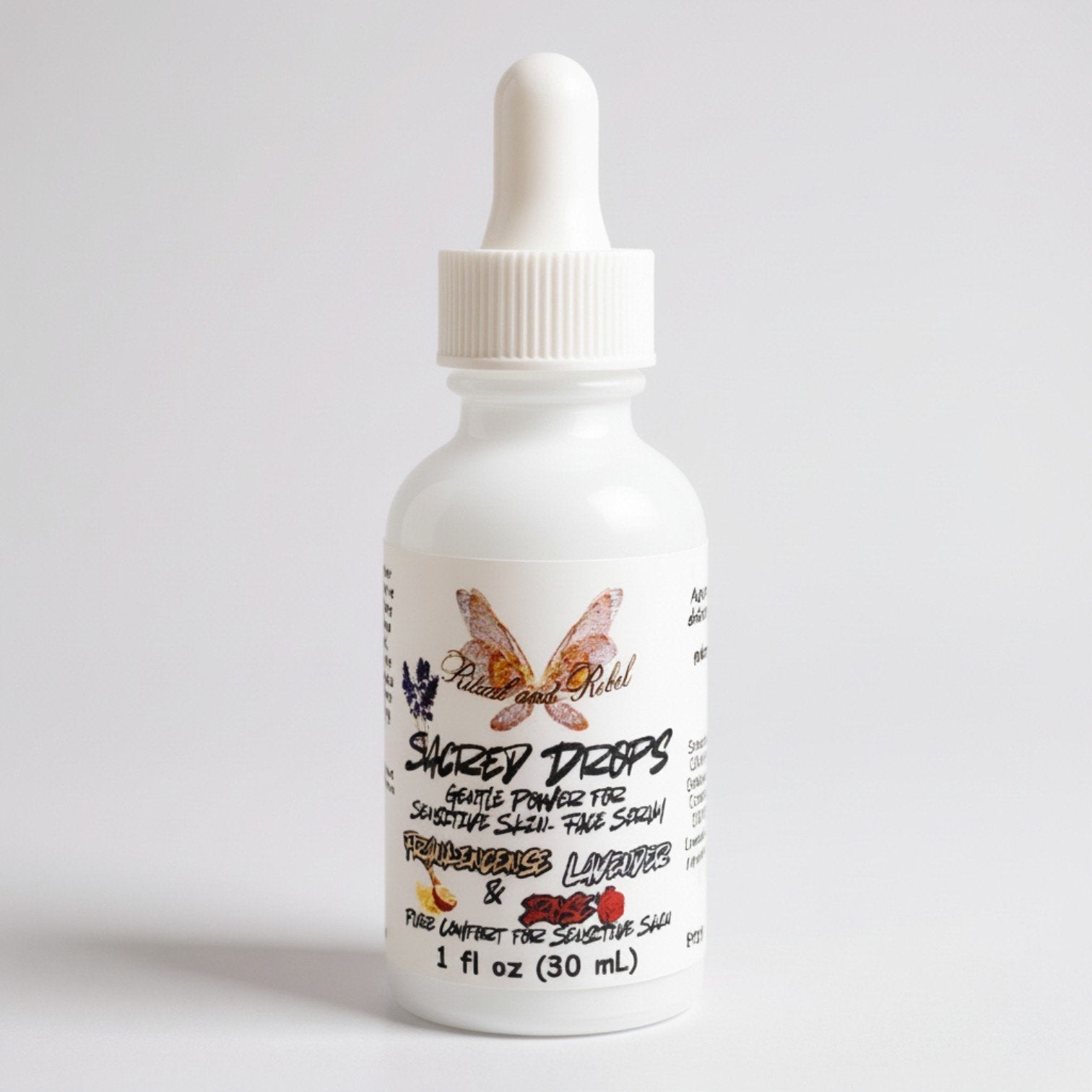
Serums: Sacred Drops, Skin Reign, and Drought Defier
Serums are where sensitive skin gets its daily nourishment. Sacred Drops ($16.00) blends jojoba, argan, and hemp seed oils with rose, lavender, and frankincense. Skin Reign ($22.00) is a cushiony oil-serum for very dry, reactive skin, with aloe, squalane, and oat extract to ease tightness. Drought Defier ($16.00) leans on avocado and argan oils for stubborn dryness. Apply three to five drops to clean skin. View the Sacred Drops serum ingredients before you commit.
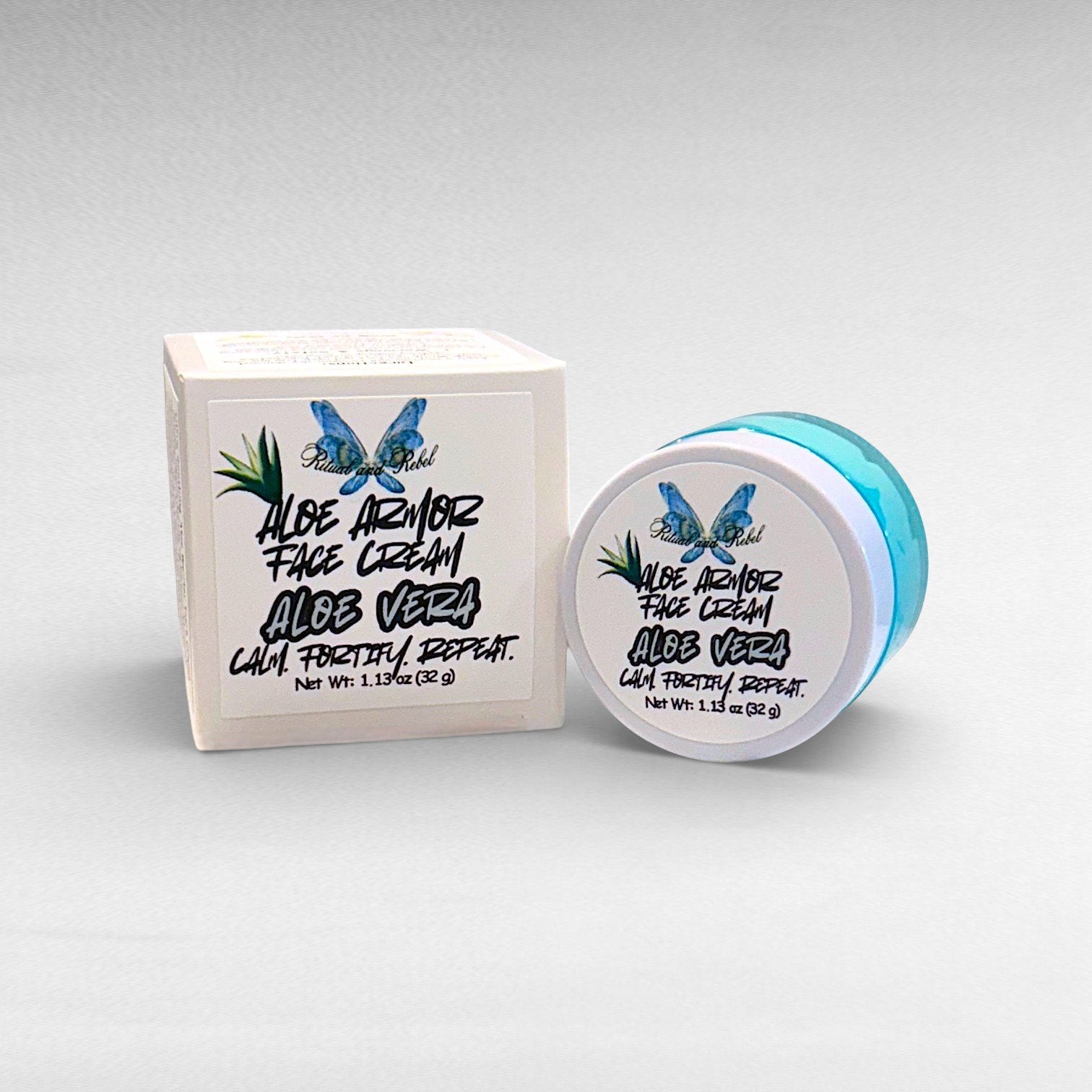
Moisturizer and Barrier Support: Aloe Armor Face Cream
Aloe Armor is made for very sensitive skin. Aloe and chamomile water, panthenol, allantoin, ceramides, and squalane are among its ingredients. Butters cushion without smothering, and the finish stays calm, not shiny. Apply a small amount to clean, dry skin morning or night, and let it absorb before makeup or sunscreen. At $32.00 for 1.13 oz, a little goes far. Check the Aloe Armor Face Cream details to confirm it fits your routine.
Fragrance-Free Skincare for Sensitive Skin: What to Know Before You Buy
Our picks use essential oils for scent instead of synthetic perfume, which many sensitive-skin shoppers prefer, but essential oils are still potential triggers. If your skin is highly reactive, patch test first and lean toward the unscented step in your routine. Fragrance-free skincare for sensitive skin isn't about smelling like nothing; it's about removing one more variable your skin has to tolerate.
A Gentle Skincare Routine for Sensitive Skin, Morning and Night
A gentle skincare routine for sensitive skin is short and consistent. Fewer steps mean fewer chances to flare. Here's the order we recommend:
- Cleanse: Honey Vortex, warm water, gentle circles
- Tone: Radical Bloom or Aqua Armor, misted or on a cotton pad
- Treat: Three to five drops of your serum
- Moisturize: Aloe Armor to seal it in
- Morning only: Follow with sunscreen
Keep it to these steps for two weeks before adding anything new. If you want to build the full set at once, you can browse the complete Face Ritual collection and match products to your skin type.
Dermatologist Recommended Skin Care Products for Sensitive Skin: What That Label Can and Can't Tell You
"Dermatologist recommended" is a marketing phrase, not a certification. It usually means a brand paid for a study or a dermatologist endorsed the line, not that a doctor reviewed the formula for your skin. The American Academy of Dermatology's sensitive skin advice is a better guide: it points to fragrance-free formulas and gentle cleansing.
Patch Testing and Introducing New Products Safely
Patch testing is the single best way to avoid a reaction, and it takes minutes, but most people do it wrong by testing on the face, testing several products at once, or giving up after an hour. Here is a protocol you can actually follow, plus how to tell an irritation from an allergy and when to stop guessing.
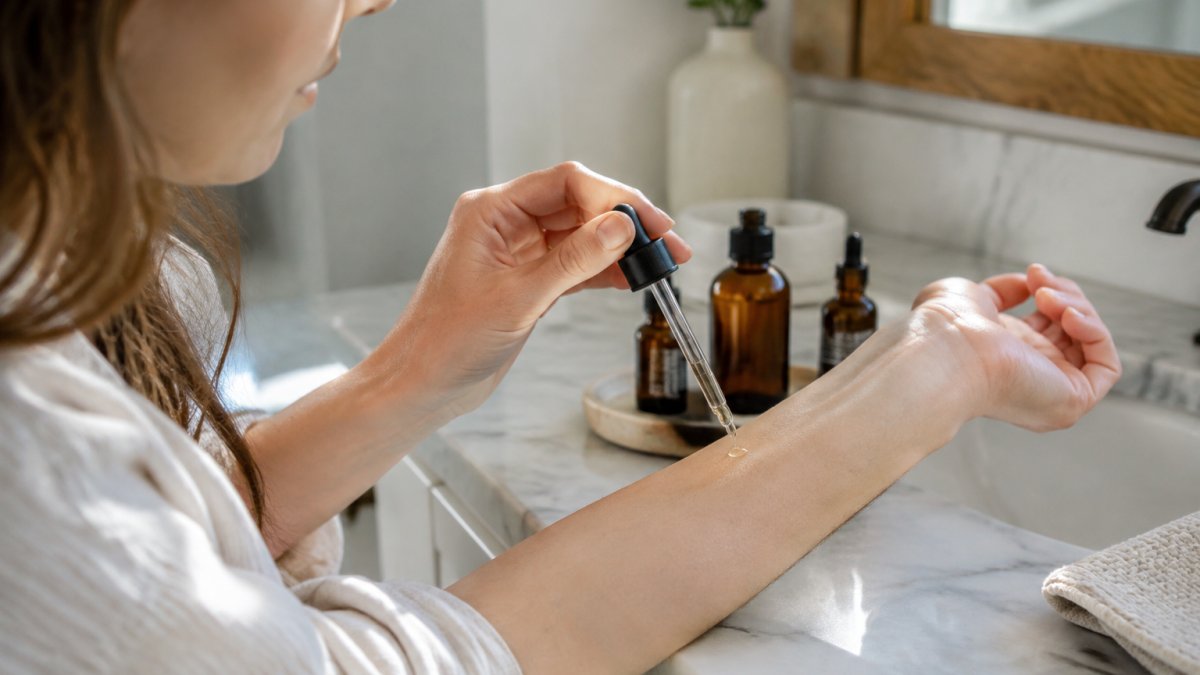
The patch test protocol
- Pick one product. Not a routine, one product.
- Choose the site. The inner forearm or the side of the neck is standard; the neck is closer to facial skin and a better predictor for face products.
- Apply a small amount, roughly the size of a pea, to a 1-inch square and let it dry. Do not rub it in.
- Leave it alone for 24 hours. Do not wash the area. If it is a rinse-off cleanser, apply a diluted amount and rinse after a minute, then observe.
- Check at 24 and 48 hours. Look for redness, itching, swelling, or a raised bump. Some reactions are delayed; a 48-hour check catches most of them.
- If clear, repeat on the face with a small amount at the jawline for two to three days before using it on the full face.
Irritation versus allergy
These are not the same, and they call for different responses. Irritant contact dermatitis is a direct dose-dependent reaction: too much of a strong product, or a product left on too long, damages the skin surface. It usually stings or burns quickly, stays confined to where the product touched, and settles when you stop. Allergic contact dermatitis is an immune response that can develop after years of safe use; it is often itchy, may spread beyond the application site, and can appear 24 to 72 hours later.
Introducing products one at a time
Introduce one new product at a time, and give each a full week before adding the next. Start with the gentlest step, usually the cleanser, then the moisturizer, then any treatment or serum. Keep a simple log: product name, date started, and any change in redness, stinging, or texture. A week is the minimum; two weeks is better for leave-on products. Watch out: layering three new products in one night makes it impossible to tell which one caused a flare, and it can turn a mild irritation into a full barrier disruption.
When to stop and see a professional
If a reaction does not settle within a few days of stopping the product, if it spreads, or if you cannot identify the trigger after two or three careful introductions, stop experimenting. The American Academy of Dermatology's guidance on skin reactions recommends a dermatologist for persistent rashes. Patch testing narrows the field; it does not replace a diagnosis when symptoms keep coming back.
Frequently Asked Questions
What are some good clean skincare products for sensitive skin?
Start with a low-lather cleanser like Honey Vortex Face Wash ($20), which uses almond castile and raw honey. Follow with a soothing toner such as Radical Bloom ($18) for reactive skin or Aqua Armor ($18) for dryness. For moisture, Aloe Armor Face Cream ($32) combines aloe, chamomile, ceramides, and squalane to cushion and support the barrier. A short, consistent routine of three to four products beats a long one when your skin reacts easily.
Which ingredients should people with sensitive skin avoid?
Watch for high concentrations of denatured alcohol, strong acids left on the skin, physical scrubs with coarse particles, and long fragrance blends. Essential oils are not automatically off-limits, but they are a common trigger, so patch test anything that lists several at once. Sulfate-heavy foaming cleansers can strip the barrier and leave skin tight. Read the full ingredient list rather than trusting front-of-label words like gentle or natural, .
How do you patch test a new skincare product?
Apply a small amount to the inside of your forearm or behind your ear, then leave it alone for 24 to 48 hours. Check for redness, itching, or swelling before using it on your face. Once it passes, introduce one product at a time and give it three to five days before adding the next, so you know exactly what caused a reaction if one appears. Radical Bloom's own directions suggest starting once daily for three to five days on barrier-damaged skin.
Is fragrance-free skincare better for sensitive skin?
Fragrance is one of the most common causes of contact reactions, so fragrance-free formulas reduce your exposure to a known trigger. That said, fragrance-free does not mean risk-free, and products scented only with essential oils still contain aromatic compounds. If your skin has reacted before, choose the least scented option in a line and patch test first. If you love scent, apply it in a body product rather than leaving it on your face all day.
What is the best skincare routine for sensitive skin?
Keep it to four steps. Cleanse with a gentle, low-lather wash, tone with a hydrating mist, press in a soothing serum, and seal with a barrier cream. Do this morning and night, and add sunscreen in the morning. Introduce one new product at a time, wait three to five days between additions, and stop anything that stings or burns rather than tingles.
